

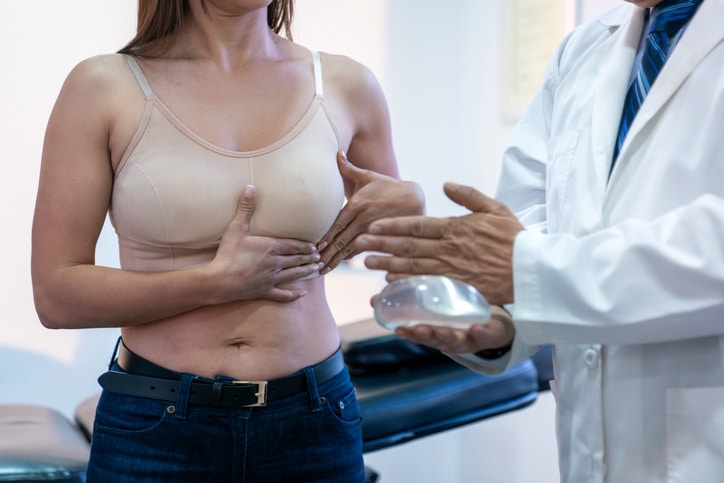
Breast augmentation: what patients need to know
What is breast augmentation used for?
Breast augmentation is the second most common cosmetic surgery after liposuction. Those who would benefit the most are those who want larger breasts or have had postpartum deflation and want to restore their breast shape. It is also commonly used to correct breast asymmetry (imbalance), enhance breast shape and volume, and improve how clothing fits.
Are there any reasons why I would not qualify for breast augmentation?
You must be nicotine-free for four weeks before and after surgery. You must be at least 19 years old for most breast augmentationproceduresor at least 22 years old for silicone implants.
Which is better, silicone or saline implants?
The advantage of silicone implants is that they feel and look more natural than saline implants, which can wrinkle and therefore look and feel less natural. On the other hand, ruptured silicone implants can be difficult to detect and can cause inflammation resulting in clusters of immune cells called granulomas. Therefore, the U.S. Food & Drug Administration (FDA) recommends having an MRI three years after surgery and every two years thereafter to monitor silicone implants for undetected leaks or ruptures.
It should be noted that the latest generation of silicone implants have a much lower leak or rupture rate than earlier generations due to improved silicone bonding technology. If a saline implant leaks or ruptures, the saline is safely absorbed by the body.
How do I know what size implants to choose?
Implant size is based upon the patient’s goals in terms of desired breast size and projection. The implant size is limited by the measured patient’s breast base width. These goals are discussed with a board-certified plastic surgeon, who will determine what implant sizes are safely possible. Choosing implants that are too large can stretch nearby tissue and cause rippling and other issues.
Where will my scar be?
In most cases, your scar from your surgical incisions (cuts) will be in folds of the breast, otherwise known as the inframammary creases. This allows for well-hidden scars and best control of implant placement. There are other options for where to make the incisions, but they carry greater risk and certain limitations.
Will the implant be placed above or below the muscle?
This question is in reference to whether the implant is placed above or below the pectoralis muscle, also known as subpectoral (below the muscle) versus subglandular/subfascial (above the muscle).
Subpectoral is the most common method for implant placement. Its major advantage is that it has minimal interference with mammogram screenings for detecting breast cancer. Its disadvantage is in patients who have a muscular chest, because flexing of the pectoralis muscle can cause visible rippling of the implant (known as animation deformity). Another potential disadvantage is that the implant may shift or displace over time due to contraction of the muscle, and this could require a revision surgery to correct it.
Subglandular/subfascial placement has the advantage of avoiding animation deformity and implant malposition. However, it does have a higher rate of capsular contracture, more implant wrinkling and palpability, and it can interfere with mammogram detection of breast cancer.
For patients with minimal breast tissue, it is generally recommended that the implant be placed in a subpectoral position. For patients with adequate breast tissue or volume, a subglandular or subfascial position is perfectly acceptable.
Will I need a breast lift at the same time?
A breast lift is known as a mastopexy. In combination with augmentation, it is known as augmentation mastopexy. Common indications for needing a lift with augmentation include postpartum atrophy and drooping of the breasts, when the nipple position is below the level of the breast fold, significant weight loss, and when there is no visible skin below the areola when viewed in a standing position. The decision for a lift in combination with an augmentation should be made in consultation with one of our board-certified plastic surgeons.
What complications are associated with this surgery?
It is not unusual for patients to experience some changes in nipple sensation, but most patients have near normal sensation after recovery. The loss of sensation is possible but rare. The infection rate is low at less than 1%, as is the risk of hematoma (blood pooling outside of vessels).
Saline implants leak at a rate of 1% per year. Silicone leak rates are harder to determine, though some studies suggest a rate of 30% after five years. For this reason, the FDA recommends regular MRIs to look for leaks/ruptures in silicone implants. If leaks/ruptures are found, patients will speak with one of our plastic surgeons to discuss removing the implants (and possibly their surrounding capsules) and replacing the implants.
Some patients (about 20% over three years) may need reoperation or revision surgery. The most common reason is to change breast size. The long-term risk associated with implants is a condition known as capsular contracture. The body always forms a capsule around any implant, but it is very thin and usually does not cause any problems. In some cases, patients may form thicker capsules that can become hard and even calcified. A firm capsule can cause pain or distortion of the breast. In those cases, removal of the implant and capsule is needed, along with replacement of the implant.
When can I start exercising again, and when can I return to work?
Patients may resume aerobic activity and exercise as soon as two weeks after surgery. Patients may start strenuous exercise and exercising with weights as soon as six weeks after surgery. Until then, patients should not lift more than five pounds. If patients feel well, they can return to work and start driving within a few days after surgery.
Will I need to wear anything in particular after surgery?
After surgery, patients can wear any type of bra that is comfortable for them, but most prefer wireless bras for the first several weeks.
How can I learn more and schedule a consultation?
Please call 205-871-4440 to schedule a consultation with one of our board-certified plastic surgeons to discuss breast augmentation. Our office is located at 2850 Cahaba Rd., Birmingham, Alabama 35223.
Common Terms
References
Schwartz, Michael. “Evidence-Based Medicine: Breast Augmentation.” Plastic and Reconstructive Surgery Journal. CME. July 2017.
Hidalgo, David; Spector, Jason. “Breast Augmentation.” Plastic and Reconstructive Surgery Journal. CME. April 2014.
Hidalgo, David; Spector, Jason. “Mastopexy.” Plastic and Reconstructive Surgery Journal. CME. October 2013.
Hammond, Dennis C; Schmitt, William P.; O’Connor, Elizabeth A. “Treatment of Breast Animation Deformity in Implant-Based Reconstruction with Pocket Change to Subcutaneous Position.” Plastic and Reconstructive Surgery Journal. Vol. 135, Number 6, June 2015.